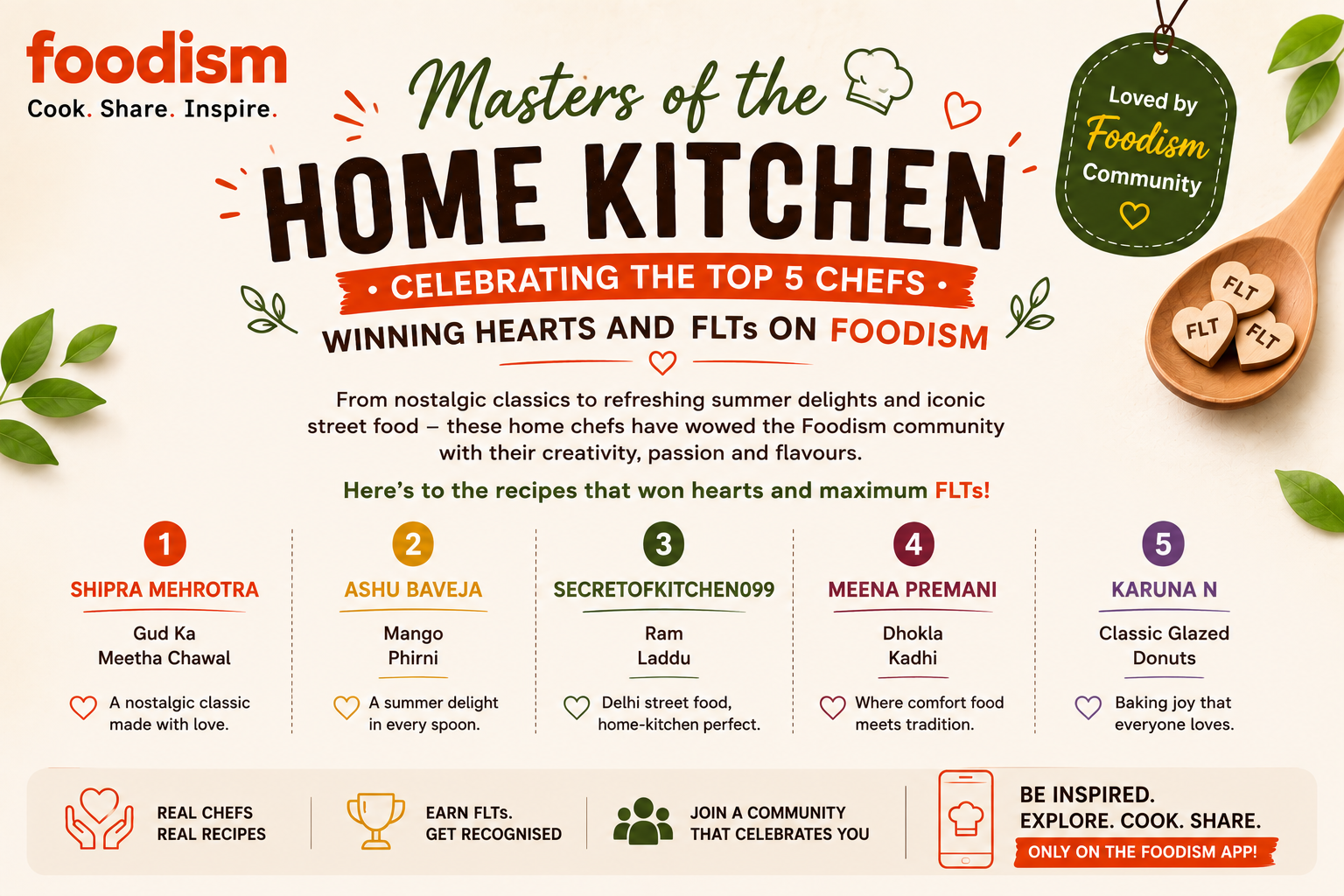
Masters of the Home Kitchen: Celebrating the Top 5 Chefs Winning Hearts and FLPs
There is something profoundly magical about home cooking. Unlike commercial kitchens that rely on standardized formulas and bulk preparation, a home kitchen runs entirely on intuition, memory and love. It is where generational secrets are kept alive, where traditional recipes are carefully adapted for modern palates and where simple ingredients are transformed into pure comfort food.
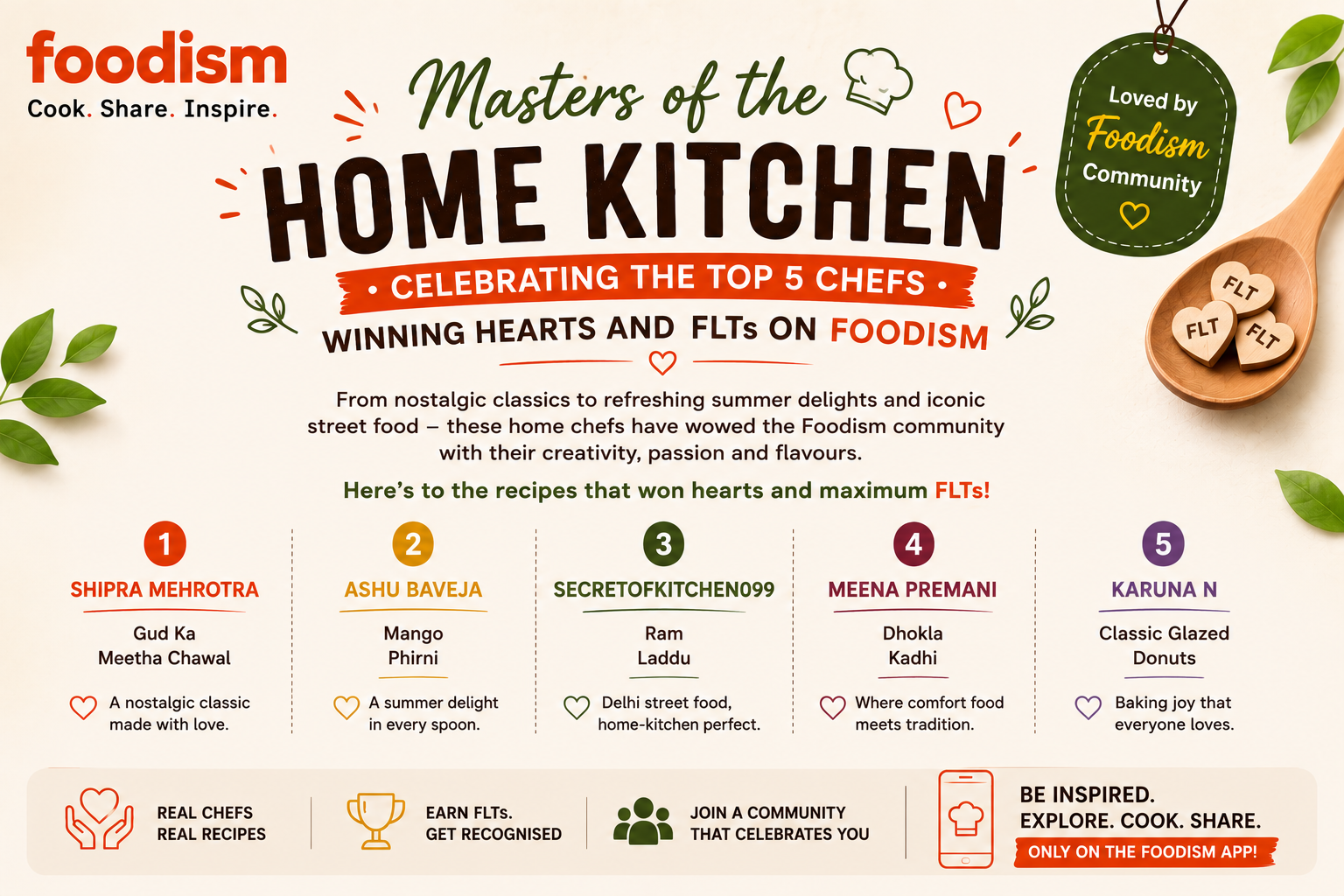
On the Foodism platform, the culinary community has a distinct way of honouring this artistry: Foodism Likes and Tokens (FLTs). FLTs represent more than just digital applause; they are a direct reflection of a community captivated by a chef's presentation, precision and culinary soul. Recently, five exceptional home chefs have climbed to the absolute top of the leaderboard, earning maximum FLTs for their standout creations.
Let's step inside their kitchens, unpack the brilliant recipes that earned them this massive acclaim and discover what makes their cooking so irresistibly special.
1. Shipra Mehrotra: Reviving Comfort with Gud Ka Meetha Chawal
Sweet treats are a cornerstone of Indian hospitality, but few desserts carry the rustic charm and deep warmth of Gud Ka Meetha Chawal (Jaggery Sweet Rice). Crafted with exceptional care by home chef Shipra Mehrotra, this recipe serves as a nostalgic master class in North Indian comfort food, capturing the hearts - and FLTs - of thousands on the platform.
While modern desserts often rely heavily on refined white sugars and heavy creams, Shipra’s creation shines a spotlight on jaggery (gud), a raw, unrefined sugar known for its deep, earthy undertones resembling molasses.
The Art Behind the Dish
Preparing the perfect Meetha Chawal is a delicate balancing act. If the rice is cooked too long with the jaggery, it becomes tough and chewy; if it isn't infused correctly, the flavours remain separate. Shipra solves this by perfectly timing the introduction of the jaggery syrup to fragrant, parboiled Basmati rice.
What truly elevates her dish is the tempering process. By roasting aromatic spices like green cardamom powder and cloves in pure ghee (clarified butter), she builds a complex flavour foundation. Finished with a generous handful of golden raisins, almonds, and tutti-fruity, Shipra's recipe is a master class in texture - fluffy, fragrant, lightly sweet, and satisfyingly crunchy. It’s no surprise this heartfelt recipe became a major FLP winner.
2. Ashu Baveja: The Ultimate Summer Indulgence – Mango Phirni
When summer rolls around, the culinary world eagerly awaits the king of fruits. Home chef Ashu Baveja capitalized on this seasonal obsession by presenting a dessert that is both visually stunning and incredibly luxurious: Mango Phirni.
Phirni is a classic North Indian pudding made from ground rice and milk, traditionally served cold in earthen clay pots (shikoras), which absorb excess moisture and impart a subtle, rustic aroma. Ashu’s brilliant twist incorporates fresh mango pulp into the base, breathing vibrant, tropical life into a timeless tradition.
The Secrets to Her Success
The texture of a classic phirni is entirely different from a standard rice kheer. Instead of using whole rice grains, Ashu uses coarsely ground soaked rice. This allows the starch to release evenly into the milk as it slowly simmers and reduces, resulting in a velvety, thick, custard-like consistency.
Once the cooked rice pudding cools completely Ashu folds in the smooth, vibrant mango pulp. Adding the pulp to a cooled base ensures the fresh, bright acidity of the mango doesn't curdle the milk. Infused with a hint of cardamom powder, raisins, figs the final dish is a beautiful balance of creamy, fruity and aromatic notes. Garnished aesthetically with slivered almonds and pieces of mango, Ashu's Mango Phirni won maximum FLTs by proving that traditional sweets can easily adapt to modern, refreshing flavour pairings.
3. secretofkitchen099: Delhi Street Food Perfection – Ram Laddu
For those craving something savoury, fiery, and deeply comforting, the home chef operating under the moniker secretofkitchen099 delivered exactly that. Celebrating traditional Sindhi and North Indian street food sensibilities, this chef earned widespread acclaim and a massive haul of FLTs for mastering one of Delhi’s most iconic street eats: Ram Laddu.
Despite the sweet-sounding name, Ram Laddus are actually intensely savoury, ultra-crispy lentil fritters served piping hot under a mountain of shredded radish and bright, tangy chutneys.
Deconstructing the Crispiness
The magic of a perfect Ram Laddu lies entirely in the batter texture. A unique blend of split yellow moong dal and chana dal is soaked for hours, ground into a smooth but thick paste, and then vigorously whisked by hand. This crucial whisking process incorporates air into the heavy batter, ensuring the laddus fry up incredibly light and fluffy on the inside while maintaining a shatteringly crisp exterior.
But secretofkitchen099 didn't stop at the fritters. What made this recipe go viral on the platform was the accompanying components. The chef paired the golden-fried lentil balls with an authentic, zesty green chutney enriched with fresh coriander, mint, green chillies and a squeeze of tamarind. Layered with freshly grated white radish (mooli) and spiked with a dash of chaat masala, the dish offers an incredible contrast of textures and temperatures - hot, cold, crunchy, fluffy, spicy and sour all in one single bite.
4. Meena Premani: The Crown Jewel of Celebrations – Vegetable Biryani
No culinary leaderboard would ever be complete without a spectacular biryani, and home chef Meena Premani delivered a showstopper. Her recipe for Veg Biryani became an instant favourite, pulling in immense FLTs from home cooks eager to master the art of this infamously complex dish.
Many home cooks shy away from making biryani because it requires absolute precision across multiple moving parts. If the rice is overcooked, it becomes mushy; if the vegetable base is too dry, the dish scorches; if the spices are unbalanced, the subtle aromas are lost. Meena’s recipe breaks down this intimidating process into an accessible, flawless art form.
The Dum Architecture
Meena achieves biryani perfection through meticulous layering and the traditional dum (slow steam-cooking) method. She starts by marinating a colourful medley of fresh vegetables - carrots, peas, potatoes, and beans - in a thick, spiced yogurt mixture infused with mint leaves, fresh coriander, ginger-garlic paste and an aromatic blend of garam masala.
Long-grain Basmati rice is cooked separately until it is exactly 70% done; ensuring it still has a slight bite to it. Meena then layers the partially cooked rice over the marinating vegetables, topping it with deeply caramelized onions (birista), a drizzle of saffron-infused milk and spoonfuls of pure ghee. The pot is sealed tightly, allowing the trapped steam to gently cook the vegetables while infusing every individual grain of rice with spice and aroma. The result is a vibrant, incredibly fragrant, layered masterpiece where the rice remains beautifully fluffy and separate.
5. Karuna N: The Perfect Indo-Chinese Fusion – Paneer Manchurian
Rounding out the top five leaderboard is home chef Karuna N, who tapped into India’s collective love affair with Indo-Chinese cuisine. Her recipe for Paneer Manchurian captured a massive share of FLTs by providing the ultimate blueprint for restaurant-quality fusion street food right at home.
Indo-Chinese food is all about high heat, deep umami flavours and balancing sweet, sour, salty, and spicy notes. Karuna’s dish perfectly captures this dynamic, creating a paneer starter that remains crispy even after being tossed in a rich, glossy sauce.
Achieving Texture and Balance
The primary pitfall when cooking Paneer Manchurian at home is the paneer turning rubbery or the coating becoming soggy. Karuna avoids this by lightly coating fresh cubes of paneer in a seasoned batter made of corn flour before frying them until golden. The corn flour forms a crisp, light shell that seals in the moisture, keeping the paneer remarkably soft on the inside.
Next comes the star of the show: the Manchurian sauce. Karuna builds a fragrant aromatic base by flash-frying finely chopped garlic, ginger and onions on high heat. She then introduces a balanced mix of soy sauce for deep saltiness, schezwan sauce for heat and tomato sauce for a touch of balancing sweetness. Thickened slightly with a smooth corn flour slurry, the rich sauce clings perfectly to the fried paneer cubes. Finished with a vibrant scatter of fresh spring onion greens, Karuna's recipe stands as the ultimate crowd-pleasing appetizer!
WHY THESE 5 RECIPES CAPTURED THE FOODISM COMMUNITY
Looking closely at these top five home chefs, it becomes easy to see why they earned maximum FLTs. They didn't just share a basic list of steps; they shared culinary blueprints built on balance, texture and deep respect for flavour traditions.
- Balancing Textures: From the air-whisked lightness of secretofkitchen099’s Ram Laddus to the crisp coating of Karuna’s paneer, these chefs understand that great food must delight the senses with structural contrast
- Respecting Time: Meena Premani’s slow-steamed biryani and Ashu Baveja’s slow-reduced milk for phirni show that great flavour cannot be rushed
- Embracing Natural Flavours: Shipra Mehrotra’s use of unrefined jaggery and Ashu’s reliance on fresh, seasonal mango showcase a beautiful focus on wholesome, real ingredients
These five creators beautifully highlight the incredible talent thriving within the Foodism home chef community. They remind us all that you don't need a commercial kitchen or a formal culinary degree to create world-class, soul-satisfying food - all you need is a passion for the craft, a respect for ingredients and a kitchen to call your own.
Related Blogs

Celebrate Onam and Raksha Bandhan with the Foodism x Orika
235 Views
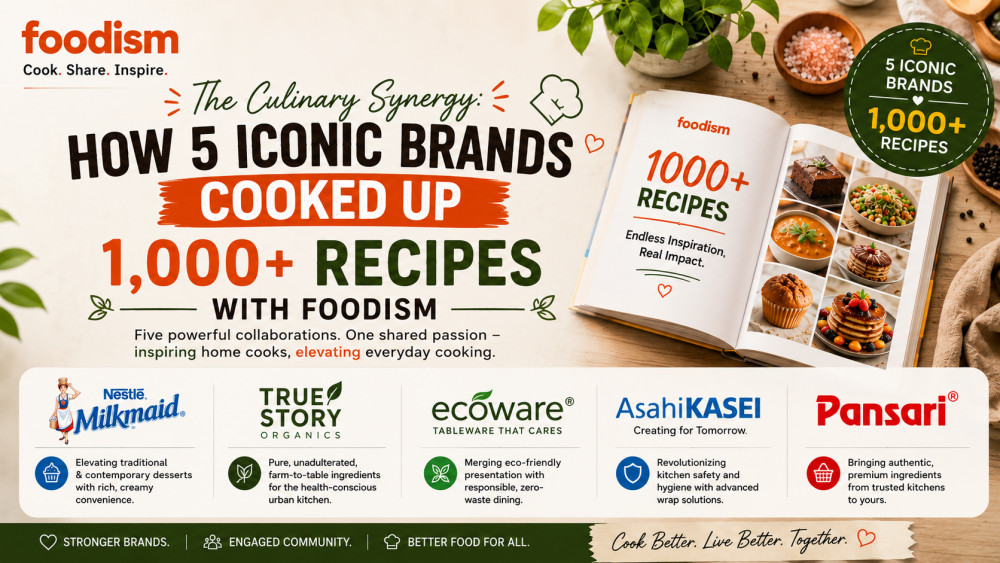
The Culinary Synergy: How 5 Iconic Brands Cooked Up Over 1,000 Recipes
333 Views
Masters of the Home Kitchen: Celebrating the Top 5 Chefs Winning Hearts and FLPs
328 Views
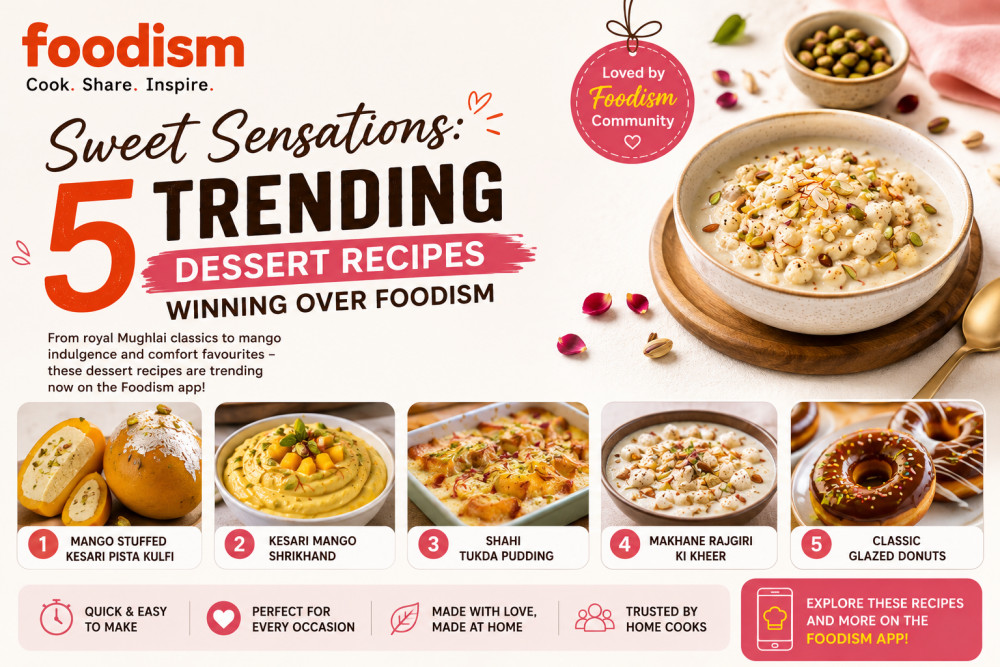
Sweet Sensations: 5 Trending Dessert Recipes Winning Over Foodism
281 Views

5 Trending Recipes on Foodism App You Need to Try
230 Views
